
A balanced diet is the basis for a healthy life
Good nutrition increases our well-being
Antje Behrendt, is a balanced diet the basis for a healthy life?
Antje Behrendt: Absolutely. This is shown in the Global Burden of Disease Study, one of the most comprehensive data sets in the history of nutritional science (https://www.thelancet.com/journals/lancet/article/PIIS0140-6736(20)30925-9/fulltext). The study aimed to find out which risk factors lead to premature onset of disease and death, both worldwide and in individual countries. Between 2009 and 2019, the top ten of these risk factors were mainly diet-related. In other words, they could have been avoided if people ate differently. (See also: http://www.healthdata.org/gbd/about)
What does a healthy diet look like today?
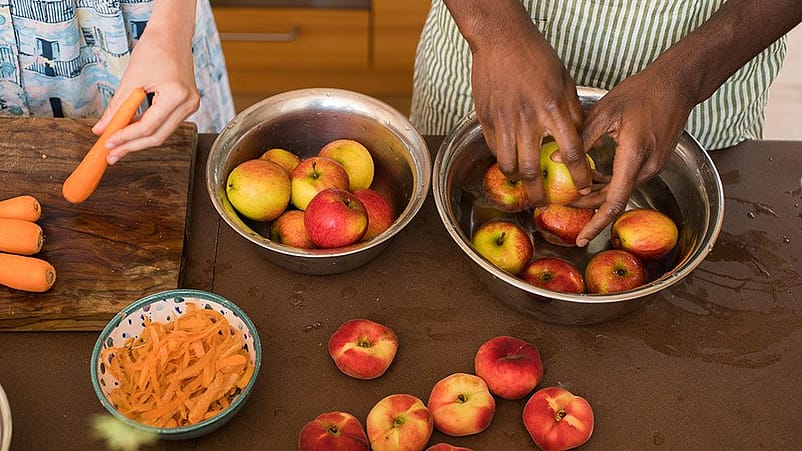
AB: A healthy diet today is not so different from what it was the past: based on regional and seasonal fresh vegetables and fruits, nuts, seeds, whole grains and legumes. If we ate that plus organic fish and high-quality organic meat occasionally (not daily), we would be relatively well supplied.
Isn’t that only half the truth? In the past, there was often nothing fresh to eat in winter. Foods were dried, smoked or pickled. Nowadays, we can get practically anything fresh all year round.
AB: Let’s take a closer look at that. We should get back into the habit of using some of those traditional methods because they are so healthy. Fermenting, for example: in sauerkraut, yoghurt, kefir, or fermented cucumbers (homemade pickles) fermenting makes the food more digestible and nutritious. What’s more, the vast range of products on offer today tends to obscure the actual situation. In the case of fruit and vegetables, long transport routes and suboptimal storage can result in the loss of nutrients. There are indications that monocultures pollute and deplete the soil, making it less fertile than before. The term “nutrient dilution” refers to when we eat plenty of fruits or vegetables and other nutrient-rich foods but surprisingly still don’t get enough nutrients. It is not uncommon today to find ourselves in this paradoxical situation: we are overfed in terms of calories but undersupplied in terms of micronutrients.

Where have we gone wrong, and what habits should we change?
AB: One bad habit is eating fast foods. Whether sweet or savoury, they often contain barely any nutrients at all. Many people also reach for unhealthy beverages like soft drinks – “light” versions are no exception. Smoothies are a good alternative if you prepare them yourself and drink them fresh right away. They are better than standard juices because the fruit is not pressed but pureed. Smoothies contain high amounts of fibre as well as secondary plant compounds.
Are there any healthy cultures or regions we can look to as a role model?
AB: The so-called Blue Zones are a good role model. These are five areas around the world where people live the longest and healthiest. Blue Zones have been found in Greece, Costa Rica, Sardinia and the Okinawa archipelago in Japan. In all those places, people eat a high proportion of fresh, regional, low-processed and plant-based foods. The fresher the harvest, the higher the concentration of micronutrients. And this is where it gets interesting: Importing exotic foods from far away often makes far less sense in terms of nutrient density than eating what grows in your own country. When in doubt, I would opt for locally grown blueberries over imported açai berries. Eating local also makes sense in terms of environmental sustainability. And when it comes to both fresh and preserved foods and even food supplements, I always look for organic products.
How do I find out what nutrients I need?
AB: I begin every nutrition consultation with a review of what my client has eaten in the last few days using a food diary. Many people think they eat well, but there are always surprises. “I eat a lot of fruits and vegetables,” I’ll often hear, when in fact, it’s not as much as they thought. A lot of people don’t even reach the minimum amount of recommended dietary fibre. The surprise can also be the other way around. Sometimes all that is needed is to add a particular micronutrient, and their vitality returns.
Dietary supplements can be a helpful addition to your general daily diet. This applies particularly to people with increased nutritional needs during challenging phases and who want to support their body during this time.


What do you look for in dietary supplements?
AB: In addition to the kinds of nutrients we consume, the quality of the nutrients plays a major role. As with food, there are many different products to choose from. Dietary supplements also come in organic quality. Different from synthetically produced vitamins, they ideally consist of whole plant extracts that contain vitamins as well as secondary plant substances, which can have a wide range of positive effects.

Is it true that synthetic vitamins are better absorbed by the body?
AB: No, in most cases, naturally derived micronutrients are better absorbed by the body. Often the secondary plant substances, whose effects are usually not allowed to be advertised, also play an essential role in enhancing the effect of the primary nutrients. This was impressively demonstrated in a study on broccoli. If sulforaphane, one of broccoli’s beneficial nutrients, is consumed in its isolated form, the health-promoting effect is much weaker than if it is consumed together in a whole plant extract containing the other substances and vitamins that naturally occur in broccoli.
So removing substances is not a good idea?
Exactly: A good dietary supplement takes a holistic approach, especially because we still have much to learn about the hundreds of thousands of different phytochemicals that exist. Let’s look at it this way: Nature has already got it right. It has created good things – why would it be better to remove parts of them or artificially imitate them?

Tips: How diet can affect...
... your immune system
AB: Our immune system is highly complex. Its many biochemical processes are dependent on micronutrients. Insufficient quantities of these micronutrients cause these processes to weaken. Vitamin C, zinc, selenium, vitamin A and beta carotene play a crucial role, as do many secondary plant compounds with their antiviral or antibacterial effects. This also applies to the “sun vitamin”, vitamin D, which is involved in almost all our metabolic processes. Dietary fibre feeds our beneficial gut bacteria, which are heavily involved in defending against pathogens that cause disease. Berries and peppers are immune boosters, thanks to their high vitamin C content. Nuts and legumes are excellent sources of zinc.
... your sleep
Natural stimulants that wake you up, such as coffee, black and green tea, or guarana should be avoided a few hours before bedtime. Other foods have a calming effect and can help you sleep. Popular examples include herbal teas like lavender, valerian and passion flower. Magnesium has a relaxing effect and is found in pumpkin, sunflower and sesame seeds as well as legumes. In general, it is better to avoid heavy meals before going to bed. Instead, opt for smaller, easily digestible meals. Fatty foods, alcohol and sweets can worsen your sleep quality.
... your energy
Foods with a high nutrient density have the most beneficial effect on our energy. What is important is less the energy intake – for instance, the boost we get from glucose candy is only short-term – but the micronutrient density. People with a robust supply of micronutrients tend to feel more energetic. Our energy metabolism is highly complex and depends on many micronutrients we cannot produce ourselves but must take in through food. By contrast, the sugar we need to kick-start our energy metabolism can be derived from our body fat, so we do not need to constantly supply it through food.
... your hair, eyelashes, nails
For good growth of hair, eyelashes and nails, our organism depends on a constant adequate supply of different substances. Keratin is a key component in hair and a structural protein in our skin and nails. To produce keratin, we need biotin (vitamin B7), which is naturally found in foods such as nuts, oats and soybeans. Silica and selenium are also important for beautiful hair and nails. Millet, for example, contains both silica and zinc, another mineral essential for healthy nails and hair. Zinc is also found in sesame, pumpkin and other seeds, as well as legumes, oats and meat. Selenium is found in porcini mushrooms, Brazil nuts and legumes such as chickpeas.
