
Aloe Vera – Pure Hydration
Botanical Profile and Benefits
Habitat
The original homeland of Aloe Vera is unknown, but Sudan and the Arabian Peninsula are considered possible origins. Today, the plant is cultivated and found in the wild in North Africa, the Middle East, Asia, the southern Mediterranean region, Madeira, Cape Verde, the Canary Islands, and Central and South America. Aloe Vera has been valued as a medicinal plant for thousands of years. The ancient Egyptians even called it the "plant of immortality."
Botanical Characteristics of Aloe Vera
Aloe Vera (Aloe barbadensis miller) belongs to the Asphodelaceae family and is a succulent plant that thrives primarily in tropical and subtropical regions. Succulents are plants well-adapted to specific climatic and soil conditions, capable of storing large amounts of moisture. Its growth form resembles that of a cactus. This tropical plant is either stemless or develops a stem up to a maximum height of 25 cm. Around 20 leaves form an upright, dense rosette. The roots are relatively short and spread flat in the soil. The leaves of Aloe Vera are thick, fleshy, and covered with a waxy layer that protects them from drying out. They serve as water reservoirs, and inside them is a valuable gel.
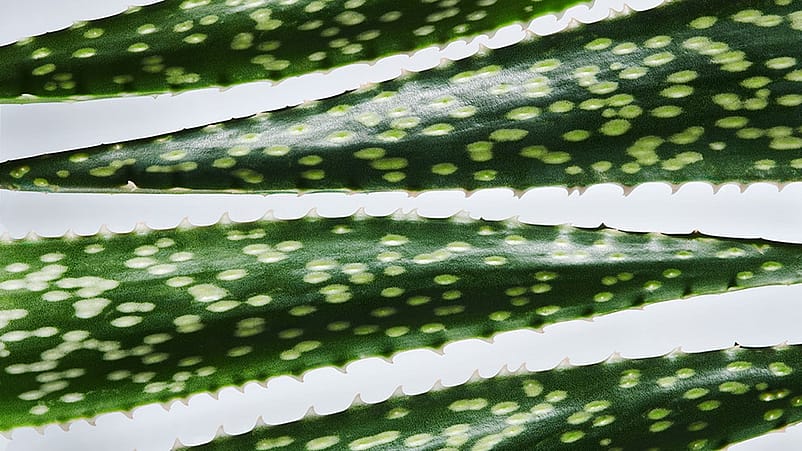
The leaves of Aloe Vera
The leaves of this succulent are 40 to 50 cm long, lance-shaped, thick, and covered with a waxy layer. They are composed of 95% water, enabling the plant to store moisture. A single leaf can weigh up to two kilograms. The edges of the leaves form a slightly pinkish border and are equipped with small teeth spaced one to two centimeters apart.
Aloe Vera blossoms
Its inflorescence is approximately 60 to 90 cm tall and branches once or twice. The flower clusters, consisting of yellow to red flowers about 3 cm long, are dense and taper towards the top.
The Secret of Aloe Vera Gel
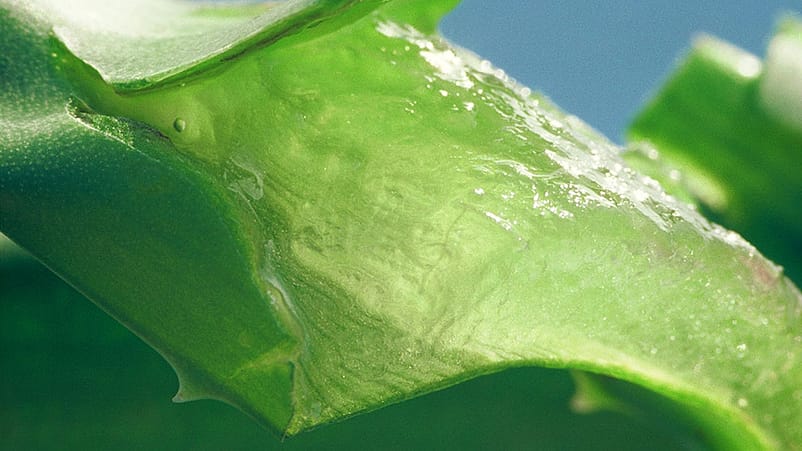
The gel from the water-storing tissue of the leaves is a colorless to slightly yellow, clear to slightly viscous liquid. The juice obtained by pressing the leaf gel is used for medical and cosmetic purposes. The polysaccharides it contains have the ability to retain moisture and deliver it to the skin.
Use in natural cosmetics
In natural cosmetics, Aloe Vera is an essential ingredient. It is used in creams, lotions, masks, and even in hair care products. Thanks to its hydrating properties, it is ideal for dry and sensitive skin and can help maintain its elasticity.
Refreshing and moisturising
Many Weleda products utilise the properties of aloe vera, for example:


How is the gel extracted?
The gel is extracted directly from the plant's leaves. For this, the leaves are carefully cut open, and the clear, slightly slippery gel is removed. It is important to remove the yellow aloin layer located just beneath the leaf surface, as it can have an irritating effect.
