
Wormwood – Artemisia absinthium
Botanical profile
A gift from Artemis and artists’ elixir
The bitter herb wormwood (Artemisia absinthium), like its cousin mugwort, finds culinary applications, with even small amounts aiding the digestion of heavy, rich meals.
Revered as gifts from Artemis, the virgin huntress goddess who ruled over wildlife and forests, wormwood and mugwort were also associated with purity. Wormwood, it was believed, could dispel impure thoughts.
Medieval monks introduced wormwood to Europe, cultivating it in their gardens as a medicinal plant. The proverbial “drop of bitterness” found in wormwood extract serves as a reminder that happiness seldom remains entirely untainted. Absinthe, a highly alcoholic spirit made with wormwood herb, gained notoriety in the 19th century. The bright green beverage captured the fascination of artists such as van Gogh and Picasso, who relished the “green fairy” as an aperitif. Today, A. absinthium continues to be used for its distinct bitter taste as a key ingredient in vermouth and other liquor infusions.
Velvety, aromatic leaves
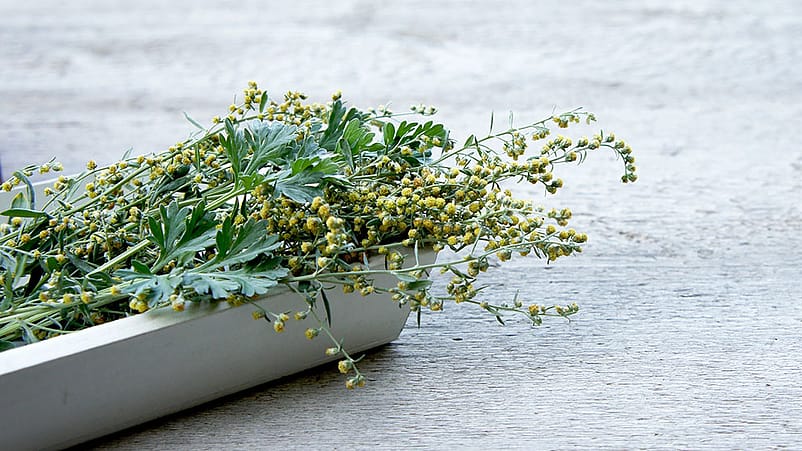
Originating in North Africa and arid regions of Eurasia, the common wormwood is now widespread across Europe. This perennial shrub in the Asteraceae (composite) family can reach a height of one metre. The name “wormwood” alludes to its traditional use as an antiparasitic. With numerous bushy shoots emerging from a robust rhizome, the plant boasts velvety silver-grey stems and leaves. Wormwood blooms from June to September, displaying pale yellow flower heads that gently droop, giving it a more introverted appearance compared to the vibrant hues of other composite flowers. Its close kinship with mugwort (Artemisia vulgaris) is evident in the spicy, aromatic scent shared by both plants. Thriving in sunny, warm, and well-drained, loose soils, wormwood is adaptable to various environments, including riverbanks, vineyards, roadsides, and rocky sites.
Potent bitter substances
For centuries, wormwood has been revered as a potent “amarum aromaticum”, an aromatic bitter with therapeutic qualities. The herb’s rich composition includes the bitter compound absinthin along with flavonoids, essential oils, and tannins. The bitter substances interact with taste buds at the base of the tongue, triggering saliva and gastric juice production and making our mouth water. This explains wormwood’s popularity as a healing tonic, used to treat stomach, intestinal and biliary ailments as well as appetite loss. It is usually taken as drops or tea before meals to stimulate the appetite, but can also be used after meals for digestive relief. Wormwood’s stimulating and invigorating properties make it a valued holistic remedy, promoting alertness, warmth, and cleansing, detoxifying effects. However, the presence of thujone, a compound with potential adverse effects, makes wormwood unsuitable during pregnancy or breastfeeding. Consultation with a healthcare professional is recommended for any concerns.
Stomach and intestinal support
Wormwood is traditionally harvested at its peak flowering stage. It is valued for its leafy and flowering sections, referred to as “Absinthii herba”, rather than its woody stems. Amara drops from Weleda are infused with bitter wormwood extract to soothe and support the digestive process, offering a natural solution to complaints such as bloating after eating, nausea, flatulence, heartburn and loss of appetite. [PS2]
[PS2]As this refers to a specific medicinal product, please link to the mandatory safety and usage information as legally required.